Why Some Homes in St. Cloud Stay Cleaner Than Others (Even on the Same Street)
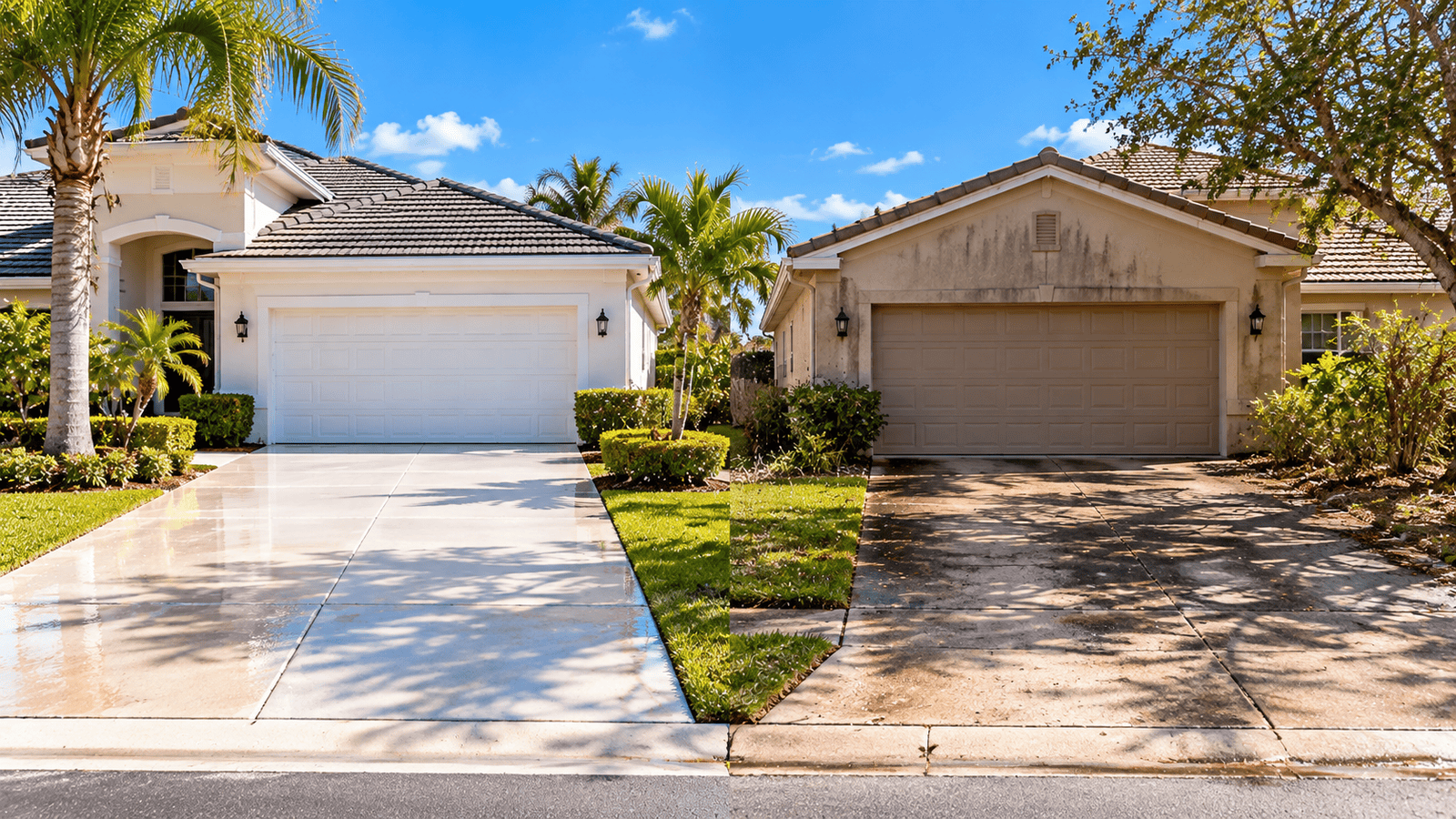
Drive down almost any St. Cloud neighborhood and you will eventually notice the same pattern. Two homes built within the same period — sometimes only a few houses apart — can look completely different. One has dark roof streaks, green siding, and stained concrete. The other still appears clean and well-maintained.
The difference usually is not the homeowner’s effort alone. Exterior cleanliness is shaped by each property’s unique environment. Every home sits inside its own small ecosystem where sunlight, shade, moisture, airflow, landscaping, and building materials interact.
This is why general Florida weather patterns do not tell the entire story. A shaded wall beside dense landscaping experiences a completely different environment than a fully exposed wall with constant sunlight. Understanding these hidden factors helps homeowners identify why their property collects stains faster and what can be done to slow the process.
The Direct Answer
Some St. Cloud homes stay cleaner longer because they naturally dry faster and experience less moisture retention. Homes with more sunlight, better airflow, controlled irrigation, fewer overhanging trees, and less moisture-sensitive materials usually accumulate fewer exterior stains. Understanding your home’s specific environmental risk factors allows you to prevent recurring staining instead of repeatedly cleaning the same problems.
The Hidden Factors That Decide How Fast a Home Gets Dirty
Your Property Has Its Own Microclimate
A neighborhood may share the same rainfall and humidity levels but individual properties experience different conditions. A home surrounded by mature trees, tall fences, or dense landscaping may trap moisture long after storms. Another home on the same street with open exposure may dry much faster.
Air movement plays a major role. Wind helps evaporate moisture and remove debris. Blocked airflow allows damp surfaces to stay wet longer. These small differences determine how quickly algae, mildew, and organic staining develop.
Shade and Sun Exposure
Sunlight acts as a natural drying system. After rain or heavy humidity surfaces exposed to direct sunlight warm up and lose moisture faster. Shaded areas stay cooler and damp longer creating better conditions for biological growth.
| Direction Facing | Sun Exposure Pattern | Common Exterior Issues | Drying Ability | Maintenance Priority |
|---|---|---|---|---|
| North-facing | Limited direct sunlight | Algae, mildew, green staining | Lower | High |
| South-facing | Consistent sunlight exposure | Heat-related fading, occasional dirt | Higher | Moderate |
| East-facing | Morning sun, afternoon shade | Morning moisture retention, light algae | Moderate | Medium |
| West-facing | Strong afternoon sun | Fading, heat stress, dust | Higher | Moderate |
North-facing walls often receive less direct drying sunlight which is why homeowners frequently notice greener or darker staining on that side of the property. Orientation is only one factor though, shade from trees and nearby structures can change the equation entirely.
Tree Canopy — The Double-Edged Effect of Mature Landscaping
Trees add value, cooling, and beauty to Florida properties but they also change exterior conditions. A large oak canopy can reduce sunlight reaching roofs and walls while allowing leaves and organic debris to accumulate. Pine trees contribute needles and debris that collect in roof valleys and gutters. Dense shrubs near walls restrict airflow and keep surfaces damp longer.
The key factors are shade duration, leaf debris accumulation, roof moisture retention, and reduced airflow. Longer shade periods reduce drying time. Organic material holds moisture against surfaces. Shaded roofs show biological growth more visibly. Poor circulation slows evaporation.
Water Exposure and Moisture Sources That Keep Homes Dirtier
Irrigation Overspray
Many exterior staining problems are not caused by rainfall alone. Sprinkler systems repeatedly add moisture to areas that would otherwise dry between storms. Overspray onto siding encourages green growth. Repeated watering on driveways leaves mineral deposits. Wooden fences exposed to regular irrigation discolor faster because they receive moisture cycles unrelated to weather.
Redirecting sprinkler heads or reducing unnecessary spray is one of the highest-impact low-cost adjustments a St. Cloud homeowner can make to slow exterior staining.
Nearby Lakes and Retention Ponds
Homes near retention ponds or lakes may experience different drying conditions because nearby water influences local humidity. This does not mean every waterfront-adjacent home will develop more stains. Properties with limited airflow and heavy shade near water sources tend to retain moisture longer and accumulate staining faster.
Drainage Problems Around the Home
Poor drainage keeps soil and nearby surfaces damp for extended periods after rain. Common contributors include standing water near walkways, moist soil against landscaping borders, plants blocking airflow near walls, and downspouts releasing water too close to the foundation.
| Risk Factor | How It Affects Moisture | Visible Signs | Risk Level | Prevention Strategy |
|---|---|---|---|---|
| Irrigation Overspray | Repeated artificial wetting | Green siding, stains near sprinklers | High | Adjust sprinkler direction |
| Heavy Tree Shade | Reduces drying sunlight | Dark walls, roof streaks | High | Trim selectively |
| Poor Drainage | Keeps soil and surfaces damp | Wet areas after rain | Medium-High | Improve grading and runoff |
| Nearby Water Exposure | Increases moisture retention | Slower drying surfaces | Medium | Monitor vulnerable areas |
| Dense Landscaping | Blocks airflow | Mildew near walls | Medium | Maintain spacing around exterior |
Why Building Materials Change How Homes Age
Roof Materials and Black Streak Development
Roof materials respond differently to Florida’s climate. Asphalt shingles commonly show dark streaks because algae growth is more visible against lighter roofing surfaces. Tile roofs may resist some staining patterns but can still collect organic buildup. Metal roofs generally have fewer porous characteristics but show dirt and environmental deposits over time.
Material choice does not eliminate maintenance. It changes how problems appear and how they should be addressed.
Stucco vs Vinyl Siding
Stucco and vinyl siding interact with moisture differently. Stucco can absorb and retain moisture within its texture making discoloration more noticeable in shaded conditions. Vinyl siding does not absorb water the same way but shows green growth on shaded sections where moisture lingers.
Cleaning methods must account for these differences. A treatment appropriate for one surface may not be suitable for another.
Home Age and Maintenance History
Newer homes are not automatically protected from staining. A recently built home surrounded by mature landscaping may develop exterior staining faster than an older home on an open sunny lot. Previous maintenance history also matters. Regular cleaning, proper drainage, and landscaping management influence how a property looks years later.
| Surface Material | Moisture Retention | Common Stains | Cleaning Sensitivity | Maintenance Frequency |
|---|---|---|---|---|
| Asphalt Shingles | Medium | Black algae streaks | High | Periodic inspection |
| Tile Roofing | Low-Medium | Organic debris, algae | Medium | Seasonal checks |
| Metal Roofing | Low | Dirt, pollen, deposits | Medium | Occasional cleaning |
| Stucco | Medium-High | Mildew, algae staining | High | Regular monitoring |
| Vinyl Siding | Medium | Green growth, dirt | Medium | Seasonal cleaning |
| Painted Wood | High | Mold, discoloration | High | Frequent inspection |
Why Your Neighbor’s House Looks Cleaner Than Yours
The Combination Effect
Exterior aging is rarely caused by one single problem. A home does not become stained simply because it has trees, shade, or humidity. The difference usually comes from several small factors working together over time.
A shaded backyard wall may stay relatively clean if it has good airflow and limited moisture exposure. The same wall can develop algae much faster when combined with sprinkler overspray, dense landscaping, and poor drainage.
Common high-risk combinations include heavy shade with irrigation overspray where surfaces remain wet longer creating better conditions for algae and mildew. Trees with poor airflow where canopy coverage blocks sunlight while trapped debris holds moisture against surfaces. Water exposure combined with moisture-retaining materials where nearby ponds and porous surfaces increase visible staining.
This is why comparing only home age or neighborhood location often misses the real cause. The surrounding conditions determine how quickly a property shows environmental wear.
Lot Position Changes Exterior Exposure
The location of a home within a neighborhood influences how it weathers. Even identical floor plans experience different exposure depending on where they sit.
Corner lots often receive more wind and sunlight because they are exposed on multiple sides. This can help surfaces dry faster but may also increase debris exposure from nearby roads and landscaping.
Interior lots may receive more shade from neighboring homes, fences, or mature vegetation. Reduced airflow creates longer drying periods after storms.
Cul-de-sac homes often have unique conditions depending on their landscaping layout. They may experience less traffic dust but can have different sunlight patterns due to surrounding properties.
The S.T. CLOUD Exterior Cleanliness Risk Score
The S.T. CLOUD Exterior Cleanliness Risk Score is a framework for evaluating why some properties accumulate visible exterior staining faster than others. It focuses on environmental conditions rather than simply measuring how dirty a home appears today.
The framework considers six major factors and assigns each a weighted importance:
| Variable | Weight |
|---|---|
| Shade and Sun Exposure Balance | 25% |
| Tree Canopy Influence | 20% |
| Moisture Source Exposure | 20% |
| Exterior Material Susceptibility | 15% |
| Wind and Airflow Exposure | 10% |
| Property Maintenance History | 10% |
Each category is rated from 1 to 10. A higher score indicates a property has more conditions that encourage faster visible aging.
| Score Range | Meaning |
|---|---|
| 1 to 3 | Lower exterior growth risk — surfaces generally stay cleaner longer |
| 4 to 6 | Moderate risk — seasonal inspections and maintenance are beneficial |
| 7 to 8 | Higher risk — recurring staining is more likely |
| 9 to 10 | High-risk property — proactive maintenance is recommended |
The goal is not to label a home as good or bad. It helps homeowners identify where preventive action has the biggest impact.
How St. Cloud Homeowners Can Keep Their Exterior Cleaner Longer
Reduce Moisture Before Cleaning Becomes Necessary
The most effective way to reduce exterior staining is to control the conditions that allow it to develop. Redirect sprinkler heads away from walls, fences, and walkways. Improve drainage in areas where water collects after storms. Trim vegetation that blocks sunlight or touches exterior surfaces. Create airflow around shaded sections of the home.
Cleaning removes existing buildup. Moisture management prevents the same problem from returning quickly.
Match Maintenance Frequency to Property Risk
Not every St. Cloud home requires the same exterior cleaning schedule. A property surrounded by trees, shade, and moisture sources will naturally need more attention than an open sunny lot.
High-risk properties typically include homes with heavy shade, dense landscaping, frequent irrigation exposure, or moisture-retaining surfaces. These homes benefit from more frequent inspections and earlier intervention.
Moderate-risk properties may only need seasonal monitoring especially after periods of heavy rain or rapid vegetation growth.
Low-risk properties with strong sunlight, good drainage, and limited moisture exposure may stay cleaner longer with less frequent maintenance.
Focus on Prevention Instead of Repeated Cleaning
Repeated cleaning without addressing the underlying cause creates the same cycle — stains appear, surfaces are cleaned, and the problem returns.
Long-term exterior cleanliness depends on three habits. Moisture control through reducing unnecessary water exposure. Landscaping management by balancing shade benefits with airflow and debris control. Routine inspections to identify small problems before they become highly visible.
A homeowner who understands their property’s risk factors makes smarter decisions about when and how to clean.
Frequently Asked Questions
Why does my house get dirty faster than my neighbor’s if we live on the same street?
Each property has different exposure conditions. Shade, trees, irrigation, drainage, airflow, and exterior materials create very different environments even between nearby homes. Two identical floor plans can age completely differently based on lot position and landscaping alone.
Does the direction my house faces affect exterior stains?
Yes. Surfaces receiving less direct sunlight often dry more slowly and may develop algae or mildew faster. North-facing walls are consistently the most problematic in St. Cloud for this reason. Other factors like trees and irrigation also influence results significantly.
Do trees make a home dirtier or just provide shade?
Both. Trees provide valuable shade but also increase maintenance needs by reducing sunlight, trapping moisture, and adding organic debris to roof and wall surfaces. The impact depends on the type of tree, proximity to the structure, and what other conditions are present.
Can irrigation overspray really cause exterior staining?
Yes. Repeated moisture from sprinklers keeps surfaces damp and contributes to algae growth, mineral deposits, and discoloration. Irrigation is one of the most controllable and most overlooked causes of exterior staining on St. Cloud properties.
How often should I clean my St. Cloud home exterior?
The ideal schedule depends on exposure conditions. Homes with heavy shade, trees, or moisture sources usually require more frequent attention than homes with strong sunlight and good airflow. Using the S.T. CLOUD Risk Score framework helps identify where your property falls on that spectrum.
What is the fastest way to slow down exterior staining on my St. Cloud home?
Adjusting irrigation heads to stop overspray onto exterior surfaces is the highest-impact lowest-cost action most St. Cloud homeowners can take immediately. Combined with trimming landscaping away from exterior walls and improving drainage in low spots, these three adjustments address the most common causes of recurring staining before cleaning becomes necessary.
The Bottom Line
The cleanest St. Cloud homes are not always the newest or most expensive. They are the properties with the best balance of sunlight, airflow, moisture control, and maintenance strategy. Understanding the specific environmental conditions on your property — not just the weather in your neighborhood — is what separates homeowners who repeatedly clean the same problems from those who stay ahead of them.

Gunnar Strauss is the owner and operator of Baha Softwash LLC, a professional exterior cleaning company based in St. Cloud, Florida. With years of hands-on experience in the pressure washing and soft washing industry, Gunnar is extremely passionate about his craft and takes great pride in helping homeowners keep their properties looking their best. He specializes in roof cleaning, house washing, concrete cleaning, and paver sealing, with a strong belief in doing things the right way, never cutting corners, and always striving to improve. His passion goes beyond just cleaning— he genuinely enjoys understanding the science behind the process, tackling challenging projects, and constantly learning new ways to deliver better results. Through his blog and YouTube channel, Gunnar shares his knowledge, experiences, and love for the industry, hoping to help homeowners better understand how to care for their properties while giving others a behind-the-scenes look at the work he loves.