
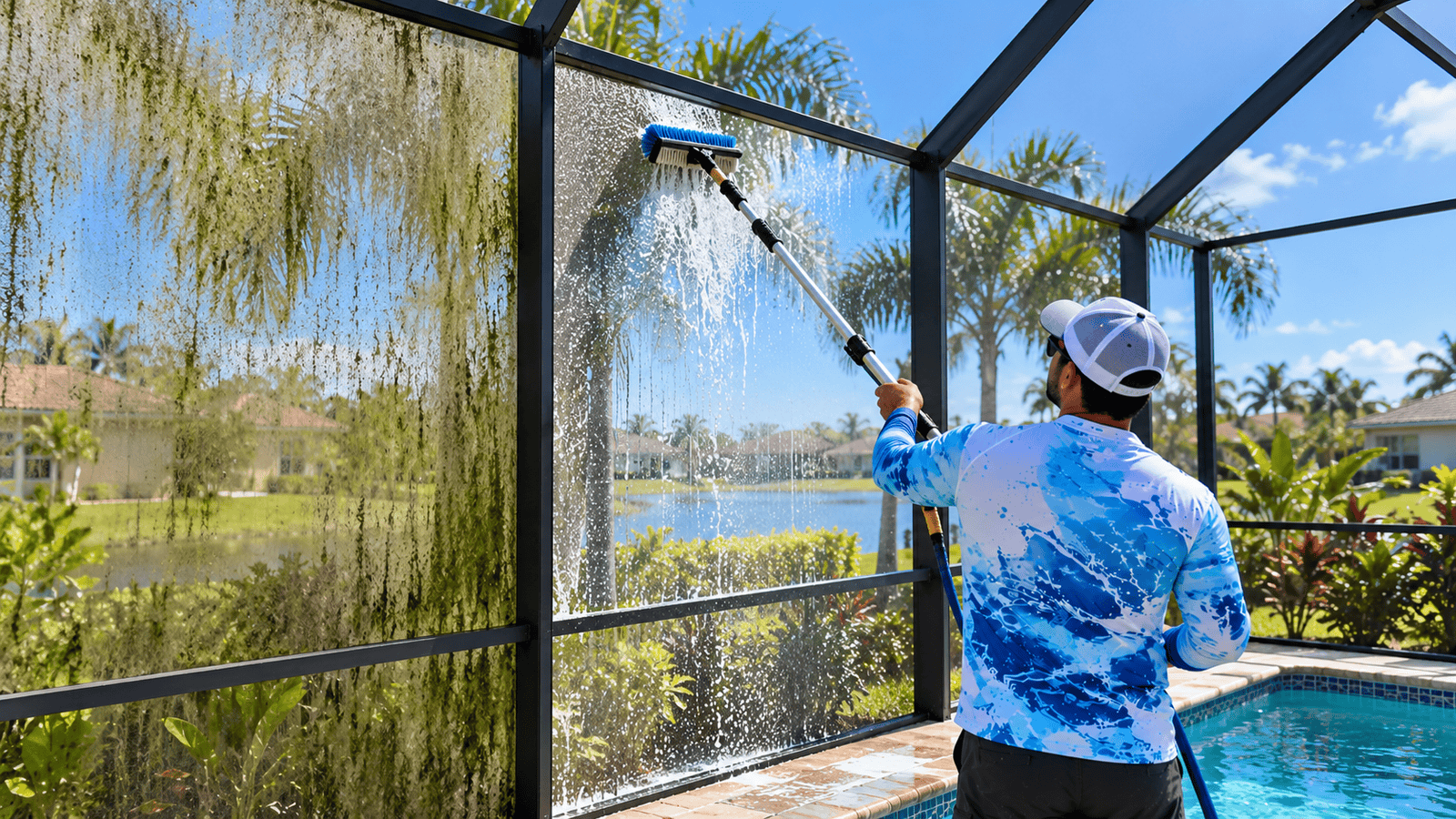
How to Remove Algae From a Pool Screen Enclosure in Florida
If you’ve tried hosing down your pool cage and watched the green come right back within a few weeks, you already know the problem. Algae on a Florida screen enclosure isn’t a surface deposit you can rinse away. It’s a living organism with root systems embedded in the screen mesh and aluminum frame, and the only thing that actually kills it is chemistry, not pressure, not scrubbing, not bleach from a spray bottle.
Here’s the exact method professionals use, why it works, and what you need to know before you attempt it yourself.
The Short Answer — What Actually Removes Algae From a Pool Cage
| Method | Does It Work? | Notes |
|---|---|---|
| Garden hose rinse | No | Removes loose debris only, algae returns immediately |
| Scrub brush and dish soap | No | Surface clean only, root system intact |
| Consumer bleach spray bottle | Partially | Too diluted, won’t penetrate established growth |
| Pressure washing screens | No | Tears screen mesh, doesn’t kill algae |
| Sodium hypochlorite soft wash | Yes | Kills algae at root level, safe for screens when rinsed properly |
There is one method that works consistently on Florida pool screen enclosures, a properly mixed sodium hypochlorite solution applied at low pressure with sufficient dwell time and a thorough rinse. Everything else is temporary at best.
Why Florida Pool Cages Get Algae So Fast
Before getting into the removal process it’s worth understanding why this problem is so persistent in Florida specifically, because it changes how you think about both the cleaning and the maintenance schedule.
Florida’s average humidity sits between 70 and 90 percent for most of the year. That level of ambient moisture means screen surfaces and aluminum framing stay damp long after rain or morning dew. Algae doesn’t need standing water to grow, it needs moisture and Florida provides it constantly.
The warm temperatures that make Florida livable year-round also mean algae never goes dormant. In a northern climate algae growth slows significantly during cold months giving exterior surfaces a natural reset cycle. In St. Cloud, Kissimmee, and the rest of Central Florida that cycle doesn’t exist. Algae is biologically active and growing 12 months a year.
Pool cages specifically create conditions that make the problem worse than on other exterior surfaces. The enclosure creates a semi-enclosed microclimate that retains humidity longer than an open exterior wall. Shade from the screen structure itself keeps sections of the frame and screens cooler and moister. Water that splashes from the pool onto the deck and lower screen sections keeps the base of the enclosure consistently wet. Homes near creeks, retention ponds, or mature tree canopy, common throughout St. Cloud and Harmony, have algae establishing even faster because of additional moisture and organic debris.
The green buildup you’re looking at on your pool cage isn’t a cleaning failure. It’s Florida doing what Florida does. The question is how to deal with it effectively.
What You’ll Need
Before walking through the process, here’s what a professional soft wash of a pool screen enclosure requires:
- Sodium hypochlorite — pool shock or professional-grade SH at the appropriate concentration
- Water for dilution and rinsing
- A soft wash pump or low-pressure application system — not a pressure washer
- Safety glasses and a respirator mask — sodium hypochlorite vapors are irritating and when you’re applying it overhead looking up, drips are a real hazard
- Garden hose with good water pressure for rinsing
- A surfactant or soap to help the solution cling to vertical surfaces and improve penetration
The mix ratio: A 5% sodium hypochlorite solution — roughly a 50/50 mix of full-strength SH and water — is the standard for established algae and lichen growth on a Florida pool cage. For lighter maintenance cleaning a more diluted mix works fine. Heavier biological growth including lichen — the crusty white and black growth that cakes onto the aluminum frame — needs full concentration and longer dwell time to kill completely.
Step by Step — How to Remove Algae From a Pool Screen Enclosure
Step 1 — Wet down all plants and landscaping
Before applying any sodium hypochlorite solution thoroughly soak all plants, grass, and landscaping around and inside the enclosure with plain water. This does two things, it dilutes any chemical runoff that reaches plant material, and it creates a moisture barrier that slows absorption of the SH into soil around sensitive roots.
Don’t skip this step. SH at cleaning concentration is strong enough to damage or kill plants if they’re dry when chemical runoff reaches them. A thorough pre-wet takes two minutes and prevents a problem.
Step 2 — Apply the solution to the outside of the enclosure first
Start on the exterior of the cage working from the top down. Apply the sodium hypochlorite solution evenly across the screen sections and aluminum framing. On heavily lichen-caked frames you’ll see the growth begin to turn white within a few minutes, this is exactly what you want to see. The lichen turning white means the chemical is penetrating and killing the organism.
Apply in sections and allow the solution to dwell, don’t rush to rinse. The dwell time is where the chemistry does its work. Rushing the rinse before the solution has had time to penetrate produces a surface clean that regrows quickly because the root system wasn’t fully killed.
Step 3 — Apply to the inside of the enclosure
After treating the outside move inside the cage and repeat the process on the interior surfaces. The interior of the screens, the beams running across the top of the structure, the aluminum framework inside, all of it gets treated. If you’re applying overhead wear your safety glasses and mask without exception. SH dripping into your eyes is a genuine hazard.
One note on the pool deck inside the enclosure, in most cases the solution running through the treated screens during the application process will have already pre-treated the deck surface. You may not need a separate application on the deck if the screens above it have been treated, but check the deck surface and apply directly anywhere that shows remaining algae or lichen growth.
Step 4 — Rinse thoroughly
This is where most DIY pool cage cleaning goes wrong. Rinsing is not optional and it cannot be rushed.
Start rinsing from the outside working all the way around the enclosure. The goal is to completely flush the sodium hypochlorite solution off every surface, screens, aluminum frame, deck, before it dries. Dried SH residue on screens can cause premature fiber degradation over time. Proper rinsing eliminates this entirely.
After rinsing the outside go back inside and rinse the interior surfaces. Make sure the pool deck inside the enclosure gets a thorough rinse, you don’t want chemical residue running into the pool water.
Rinse the plants and landscaping again after you’re done with the structure. Give everything that had any chemical exposure a final flush with plain water.
Step 5 — Post-treat any rust lines
If your enclosure or concrete deck has orange rust staining from irrigation spray, extremely common in St. Cloud and throughout Osceola County, straight sodium hypochlorite applied directly to those lines and allowed to dwell will remove them. Apply, let it sit, rinse completely. The rust lines that look permanent often come completely clean with this post-treatment step.
Will Sodium Hypochlorite Damage Pool Screens?
This is the most common concern homeowners have before attempting or authorizing a pool cage cleaning, and it’s the right question to ask.
The answer is no, when the solution is applied correctly and rinsed thoroughly. Sodium hypochlorite at the concentrations used for pool cage cleaning will not damage intact screen mesh when the job is done properly. The key word is properly, thorough rinsing to remove all chemical residue before it dries is what protects the screens from any degradation risk.
What does damage pool screens is pressure washing. High-pressure water, even at relatively low PSI settings, can push screens out of the spline that holds them in the frame and tear the mesh fibers. A screen that gets pressure washed repeatedly will fail years earlier than it should. Soft wash application at low pressure does not create the same mechanical stress on the screen material.
If your screens are already damaged, existing tears, sections that have pulled away from the spline, holes, document those before any cleaning begins. A professional operator will walk the enclosure before starting and identify pre-existing damage so there’s no dispute about what was there before the job.
When DIY Stops Making Sense
The process above works for homeowners who are comfortable working with sodium hypochlorite safely and have the equipment to apply it at low pressure with a proper rinse system. For a significant portion of St. Cloud homeowners, the combination of the chemical handling, working around pool water, overhead application, and the physical size of most Florida pool enclosures makes professional service the more practical choice.
A two-story or large lanai enclosure with heavy lichen buildup is a several-hour job with professional equipment. Attempting the same job with consumer equipment and DIY safety precautions carries real risk of inadequate rinsing, chemical damage to landscaping, and pool water contamination if the process isn’t managed carefully.
The other consideration is frequency. Florida pool cages need cleaning every 12 to 18 months in most St. Cloud environments. A professional service on that schedule is a predictable maintenance cost that protects the screen material, keeps the enclosure looking right, and prevents lichen buildup from reaching the severe stage that makes removal significantly harder.
How Often Should You Clean a Pool Screen Enclosure in Florida?
Most Florida pool cages need professional cleaning every 12 to 18 months. Properties near water, creeks, retention ponds, lakes, or with heavy tree canopy overhead will develop visible algae growth faster and may need attention closer to the 12-month mark. Properties with good sun exposure and open surroundings can sometimes go 18 months between cleanings.
The visual indicator is reliable, if you can see green on the screens or white lichen buildup on the aluminum framing from inside the enclosure, you’re due for cleaning. Don’t wait until the buildup is severe. Light early-stage algae is a faster and easier clean than heavily caked lichen that has been accumulating for two or three seasons.
Frequently Asked Questions
Does bleach kill algae on pool screens?
Consumer household bleach contains sodium hypochlorite at 3 to 6 percent concentration — the same active ingredient used in professional soft washing but at lower concentration and without surfactant. For very light algae on a recently cleaned enclosure it can help as a maintenance treatment. For established algae and lichen growth on a Florida pool cage it’s typically too diluted to fully kill the root system. Professional-grade SH at the appropriate concentration and dwell time is required for complete removal.
Can I pressure wash my pool screen enclosure?
No. High-pressure water damages screen mesh and can push screens out of the spline that holds them in the frame. Pool screen enclosures should only be cleaned with low-pressure soft wash application. The cleaning work is done by chemistry, not by pressure.
How do I stop algae from coming back on my pool cage?
Florida’s climate means algae will always return eventually — the question is how quickly. Keeping the surrounding area trimmed back to reduce shade and organic debris, managing irrigation heads so they don’t spray the enclosure, and maintaining a regular annual or biannual cleaning schedule are the most effective ways to slow regrowth.
Is it safe to clean a pool cage with the pool open?
During the chemical application phase the pool should be covered or you should take precautions to prevent SH solution from entering the water. Pool water contaminated with cleaning solution will require chemical rebalancing. A professional operator will discuss pool protection with you before starting the job.
What is the white stuff on my pool cage aluminum frame?
White or light gray crusty buildup on the aluminum frame is lichen, a combined organism of algae and fungi that physically attaches to the surface. Lichen is significantly harder to remove than green algae alone and requires full-concentration sodium hypochlorite with extended dwell time. On heavily lichen-caked frames the treatment may need to be applied twice for complete removal.
Get Your Pool Cage Cleaned by a St. Cloud Professional
If your pool screen enclosure has reached the point where a professional soft wash makes more sense than DIY, the Baha Softwash team handles pool enclosure cleaning in St. Cloud, FL throughout St. Cloud, Kissimmee, Lake Nona, and surrounding Osceola County communities. They protect the pool water and surrounding landscaping throughout the process and do a full walkthrough when the job is complete. Free quotes at (407) 901-0943.

Gunnar Strauss is the owner and operator of Baha Softwash LLC, a professional exterior cleaning company based in St. Cloud, Florida. With years of hands-on experience in the pressure washing and soft washing industry, Gunnar is extremely passionate about his craft and takes great pride in helping homeowners keep their properties looking their best. He specializes in roof cleaning, house washing, concrete cleaning, and paver sealing, with a strong belief in doing things the right way, never cutting corners, and always striving to improve. His passion goes beyond just cleaning— he genuinely enjoys understanding the science behind the process, tackling challenging projects, and constantly learning new ways to deliver better results. Through his blog and YouTube channel, Gunnar shares his knowledge, experiences, and love for the industry, hoping to help homeowners better understand how to care for their properties while giving others a behind-the-scenes look at the work he loves.


2 Comments
Comments are closed.