BLOG POST
How Florida's Humidity Affects Your Home's Exterior in St. Cloud (With Real Examples)
Florida humidity is perfect for algae, mildew, mold, and moisture buildup, but not every St. Cloud home gets hit the same way. Shade, drainage, landscaping, water exposure, and the materials on your house all decide how bad it gets. The truth is humidity only pulls the trigger. What actually decides the damage is how long your surfaces stay wet afterward. This guide breaks down which parts of your home are most vulnerable, how to tell algae from mildew from lichen, and how to score your own property's moisture risk so you can fix the cause instead of endlessly scrubbing the symptom.
Why Humidity Causes Exterior Problems
Florida humidity is tricky because moisture does not disappear the way it does in drier climates. After a summer storm, overnight condensation, or a sprinkler cycle, your surfaces stay damp long after the water stops.
That lingering dampness is what lets growth take hold. Algae, mildew, and mold do not need a steady stream of water. They need the right mix of moisture, warmth, and time, and Florida serves up all three for most of the year. When a surface stays slightly damp for long stretches, airborne spores and organic particles get their chance to attach, spread, and become visible. That is why you see green buildup on concrete, dark streaks on roofs, and discoloration on siding. It is rarely one unusually rainy week. It builds through repeated cycles where surfaces get wet, dry slowly, and get wet again before they fully recover. Warm temperatures make it worse, because the heat that would go dormant up north keeps growth active here nearly year-round.
Your Property Decides the Severity
St. Cloud's setting adds fuel. Frequent rain, warm weather, and high humidity give surfaces plenty of chances to stay damp, but your immediate surroundings decide how much of that becomes a problem.
Homes near lakes, retention ponds, and heavy landscaping dry slower because nearby water raises local moisture. Mature trees do the same by cutting sunlight and airflow. Shade is one of the biggest culprits of all. A shaded wall gets the same rain as a sunny one but takes far longer to dry, and that gap is exactly what algae and mildew need.
Landscaping matters too, since plants against your siding trap humidity and drop debris that feeds growth. And irrigation that regularly hits walls, driveways, or fences keeps adding water to areas that already struggle to dry.
This is why two homes a few streets apart can have completely different needs. The weather is identical. The sunlight, drainage, landscaping, and airflow around each home are not. Humidity creates the opportunity. The condition of your property decides whether that opportunity turns into a recurring problem. Homes with good drainage, strong sun, and open airflow give moisture fewer chances to sit. Homes with poor drainage, heavy shade, or crowded vegetation trap it. The materials play a role as well, since textured and porous surfaces hold moisture longer than smooth ones. Florida's humidity is unavoidable, but every home responds to it differently, and the deciding factor is always how long moisture stays on the surface.
How Humidity Hits Different Surfaces
Humidity does not treat every part of your home the same, because different materials hold and release moisture differently.
Roofs are usually where you notice it first. Those dark streaks are typically algae, not dirt, and they show up worst on the shaded sections that stay damp longest. Tree cover raises the risk by adding shade and dropping leaves and pollen that feed growth. Siding and stucco face the same battle. Textured stucco is especially vulnerable because its uneven surface gives moisture and organic material more places to hide, so the shaded side of the house discolors well before the sunny side.
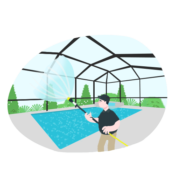
Driveways, walkways, and concrete soak up moisture through tiny pores and hold it. Shaded concrete develops green discoloration and dark patches, and areas near flower beds, downspouts, or sprinkler zones stain fastest. Walkways get genuinely slippery when algae spreads, which matters most around entrances and pool areas. Pool decks and screen enclosures are naturally high-risk because they combine constant moisture with shade and limited airflow, and screens catch debris from surrounding trees on top of it. A pool deck that looks only slightly discolored can already be slick enough to be a hazard.
Fences and shaded structures get overlooked but stay very exposed. Wood fences absorb and release moisture, so in shade with poor airflow they stay damp and start to deteriorate. Vinyl fences resist absorption but still collect green and dark staining where dirt and organic material build up. Pergolas, storage areas, and decorative features tucked under trees show the same pattern. In every case, moisture is not the only issue. It is moisture plus slow drying plus organic buildup that decides how fast a surface goes bad.
Why One Home Gets Dirtier Than Its Neighbor
Two homes can face the same rainfall and temperatures and end up looking completely different. It comes down to how each handles moisture after it arrives. Homes that dry fast resist growth. Homes that trap moisture make it recurring.
Sunlight is the most effective natural control there is. North-facing walls, spots under big trees, and areas blocked by neighboring structures stay damp longer, and even a small difference in drying time changes how fast algae develops. That is why one side of a house looks clean while another streaks. Shade gets worse when it teams up with other moisture sources, so a shaded wall near landscaping and a sprinkler zone has several things working against it at once.
Landscaping cuts both ways. It adds beauty and shade, but dense vegetation against walls kills airflow and traps humidity, and trees constantly drop debris that feeds growth. Placement matters as much as amount. A trimmed, well-spaced yard lets air move around your surfaces. A crowded one keeps them damp. Water sources add another layer. Homes near lakes carry more ambient moisture, and poorly aimed irrigation creates repeated dampness in very specific spots, which is why staining often shows up on one fence section while the rest stays clean.
Drainage might be the most important factor of all. Rain is unavoidable, but how fast water leaves decides how long your surfaces stay wet. Standing water near walkways, foundations, and fences creates the first places algae appears, and it keeps feeding recurring stains no matter how often you clean. Fixing it rarely takes major work. Clearing gutters, correcting water flow, and preventing pooling often does it. In St. Cloud's climate, exterior cleanliness depends less on how much rain you get and more on how efficiently your property dries afterward.
Knowing What Is Actually Growing
Not every dark stain is the same thing, and the difference matters because each type grows under slightly different conditions and can need a different cleaning approach.
Algae is the most common cause of exterior discoloration here, showing up as green, blue-green, or dark staining on roofs, concrete, and shaded surfaces wherever moisture stays available. Mildew is a surface-level fungal growth, usually white, gray, or powdery, that favors poor airflow, high humidity, and low sun. Mold is a broader group of fungi that appears where moisture stays trapped, especially around shaded surfaces and organic material. Lichen is a tougher, crustier growth that combines a fungus with a photosynthetic organism, often on roofs and older concrete, and it attaches firmly enough to require more careful removal. Moss is the soft, thick green growth you see on shaded roofs and damp concrete under heavy tree cover.
Color alone is a bad way to identify these, since they overlap and a dark roof streak that looks like dirt is usually algae. Location gives better clues, because roof staining behaves differently than driveway growth, and fence discoloration has different causes than pool-enclosure buildup. This matters for cleaning because treating everything the same causes damage. Delicate materials like roofing, stucco, paint, and screens can be harmed by too much pressure or the wrong product, and algae and mildew are usually better handled by solutions that break down the growth than by blasting it. A proper approach always considers three things together, meaning what is growing, where it is growing, and why that spot stays vulnerable.
The Florida Exterior Moisture Risk Score (FEMRS)
Every St. Cloud home faces humidity, but not every home develops growth at the same rate. FEMRS is a simple way to judge the conditions that decide how fast exterior problems show up. It focuses on the causes behind the stains, not just the stains themselves, because a clean surface today does not mean low risk if moisture keeps collecting in the same spots. Rate each factor, weight it, and total it out. A higher score means more conditions favor recurring growth, not that your home is damaged.
It weighs six things:
- Shade exposure (around 20 percent). One of the strongest factors, since limited sun means slower drying. Big canopies and shaded walls push this up.
- Drainage quality (around 20 percent). How well water moves away from the home. Standing water and poor runoff keep moisture around long after the rain stops.
- Water proximity (around 15 percent). Lakes, ponds, and heavy irrigation zones raise ambient moisture, especially when paired with shade.
- Landscaping moisture retention (around 15 percent). Dense vegetation against walls traps humidity and debris, while well-spaced landscaping lowers the risk.
- Exterior material sensitivity (around 15 percent). Porous and textured surfaces hold moisture longer than smooth, fast-drying ones.
- Cleaning and maintenance history (around 15 percent). Regular upkeep prevents small issues from becoming recurring ones, while years of neglect raise the risk.
Read the total like this. In the 0 to 30 range, conditions are favorable and routine care is plenty. From 31 to 60, you have some moisture-holding conditions worth monitoring with regular checks. From 61 to 80, multiple factors are stacking up and growth returns faster, so you need consistent maintenance. From 81 to 100, several conditions are combining to trap moisture, and the priority is fixing those sources, not just cleaning. FEMRS works because exterior growth is rarely one issue. It is usually several small environmental factors combining to create the right conditions for buildup.
Cleaning the Right Way, and Preventing the Rest
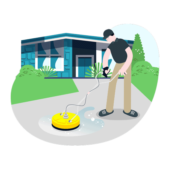
Exterior cleaning in Florida is not just about removing dirt. The method decides whether a surface gets properly cleaned, briefly improved, or accidentally damaged. Pressure washing uses concentrated force and suits durable surfaces like concrete driveways and sidewalks. Soft washing uses low pressure plus cleaning solutions to break down growth, and it is the right call for roofs, stucco, paint, and delicate siding where high pressure strips protective layers or forces water behind surfaces. Neither is universally better. You match the method to the material. A driveway with algae and a roof with staining both look dirty, but they need completely different solutions.
More pressure is not more clean, either. Your materials are built to handle weather, not aggressive cleaning, and too much force strips paint, damages finishes, and pushes water where it does not belong. Roofs are the classic example, since high pressure removes protective granules and shortens their life. And pressure alone only removes what is visible while leaving the conditions that caused the growth. A good approach always considers what created the buildup, not just how fast the stain vanishes.
The real win is prevention. Small amounts of algae and debris are far easier to manage than years of buildup, so cleaning before growth establishes keeps your home looking sharp and catches problems early. Between professional cleanings, focus on moisture. Keep gutters directing water away from the house, adjust sprinklers so they stop hitting walls and fences, and clear leaves and debris before they trap dampness against surfaces. Trim vegetation back from your walls to improve airflow, and watch the trouble spots after heavy rain, meaning shaded walls, pool areas, fences, and drainage points. If the same wall or driveway stains again quickly after cleaning, the issue is not your cleaning. It is a moisture source that needs correcting.
The Bottom Line
Florida humidity raises the baseline for every St. Cloud home, but your property decides whether you get minor staining or a recurring headache. The strongest predictor is not how humid it is outside. It is how long your home lets moisture stay trapped on its surfaces. Run the FEMRS check on your property, learn to tell what is actually growing, match your cleaning method to each surface, and fix the conditions that keep things damp. Do that, and you stop treating the same stains over and over and start actually preventing them.





FOLLOW US
Business Hours
Monday- Saturday
9am-5pm