
Removing Heavy Algae & Fixing an HOA Cleaning Issue
A nearly-new concrete driveway, an HOA notice, and light etching hiding under the algae from a previous cleaning. Here's how Baha Softwash removed the organic growth without making the existing surface damage worse — sometimes the answer is less pressure.
Project Overview
Heavy Organic Growth on a Nearly New Driveway
When this St. Cloud homeowner contacted Baha Softwash, they weren't simply looking to brighten up their driveway — they had received an HOA notice and needed the concrete properly cleaned. The two-car driveway was less than two years old, but heavy organic growth had already begun darkening the surface, with black lichen and algae visible throughout portions of the concrete.
One of the first things homeowners assume is that newer concrete shouldn't already look dirty. Florida has other plans. Even though this driveway was less than two years old and had been cleaned roughly a year earlier, algae and lichen had returned across the surface, making portions of the driveway look considerably older than they actually were. The buildup had become noticeable enough to trigger the HOA notice — but when we inspected the concrete more closely, we noticed something else.
The Challenge: Someone Had Already Cleaned It Too Aggressively
Underneath the organic growth were visible cleaning lines and areas of light surface etching from the previous cleaning. This is exactly why concrete cleaning isn't simply a question of how much pressure a machine can produce. Excessive pressure, working too close to the concrete, using an inappropriate nozzle, or moving inconsistently across the surface can leave permanent marks behind. Once concrete has been etched, pressure washing cannot put the removed material back.
Our job was twofold: remove the current algae and lichen without creating additional damage, while making the previously cleaned areas look as even as reasonably possible — and stay especially conservative on the newer concrete.
Why We Reduced the Cleaning Pressure
After evaluating the driveway, we decided to use our professional surface cleaner — but modify how aggressively it contacted the concrete. We equipped the surface cleaner with larger-orifice nozzles, letting us reduce the working pressure. That gave us the mechanical cleaning action we needed without unnecessarily attacking the newer concrete.
We also didn't expect water pressure alone to do all the work. Before surface cleaning, we chemically treated the organic growth — so the cleaning could be more effective while the pressure stayed low.
A Four-Step Approach Built Around the Surface
Rather than relying on maximum pressure, we combined protection, chemistry and controlled mechanical cleaning.
Protecting the Landscaping
The driveway was surrounded by grass, landscaping and planted areas. Before any treatment, we thoroughly saturated the surrounding vegetation with water, creating a protective buffer and letting us manage the whole property — not just the concrete.
Pre-Treating the Algae & Lichen
Instead of asking the pressure washer to remove everything mechanically, we applied a pre-treatment to loosen the widespread algae and darker lichen. Letting it work first meant we could clean more effectively with less aggressive pressure — especially valuable where prior washing had left marks.
Surface Cleaning at Controlled Pressure
We cleaned with our professional surface cleaner, working in a controlled circular pattern rather than aggressive straight passes — blending the previously etched areas instead of emphasizing them. As it moved across the concrete, the dark organic layer disappeared to reveal much brighter concrete underneath.
Treating the Black Lichen That Remained
Some stubborn black lichen remained within portions of the concrete. Rather than digging it out mechanically, we applied a post-treatment to address what remained deeper in the surface texture — continuing to treat the organic material without adding pressure to an already-etched surface.
From Dark and Streaked Back to Bright Concrete
The aerial before-and-after photographs tell the story particularly well. Before cleaning, the driveway showed widespread discoloration and darker organic growth, with the adjoining sidewalk making the contrast easy to see. After treatment and surface cleaning, the driveway was significantly brighter — heavy algae and lichen removed, and the overall appearance much more uniform. Most importantly for the homeowner, the cleaning addressed the condition that resulted in the HOA notice.
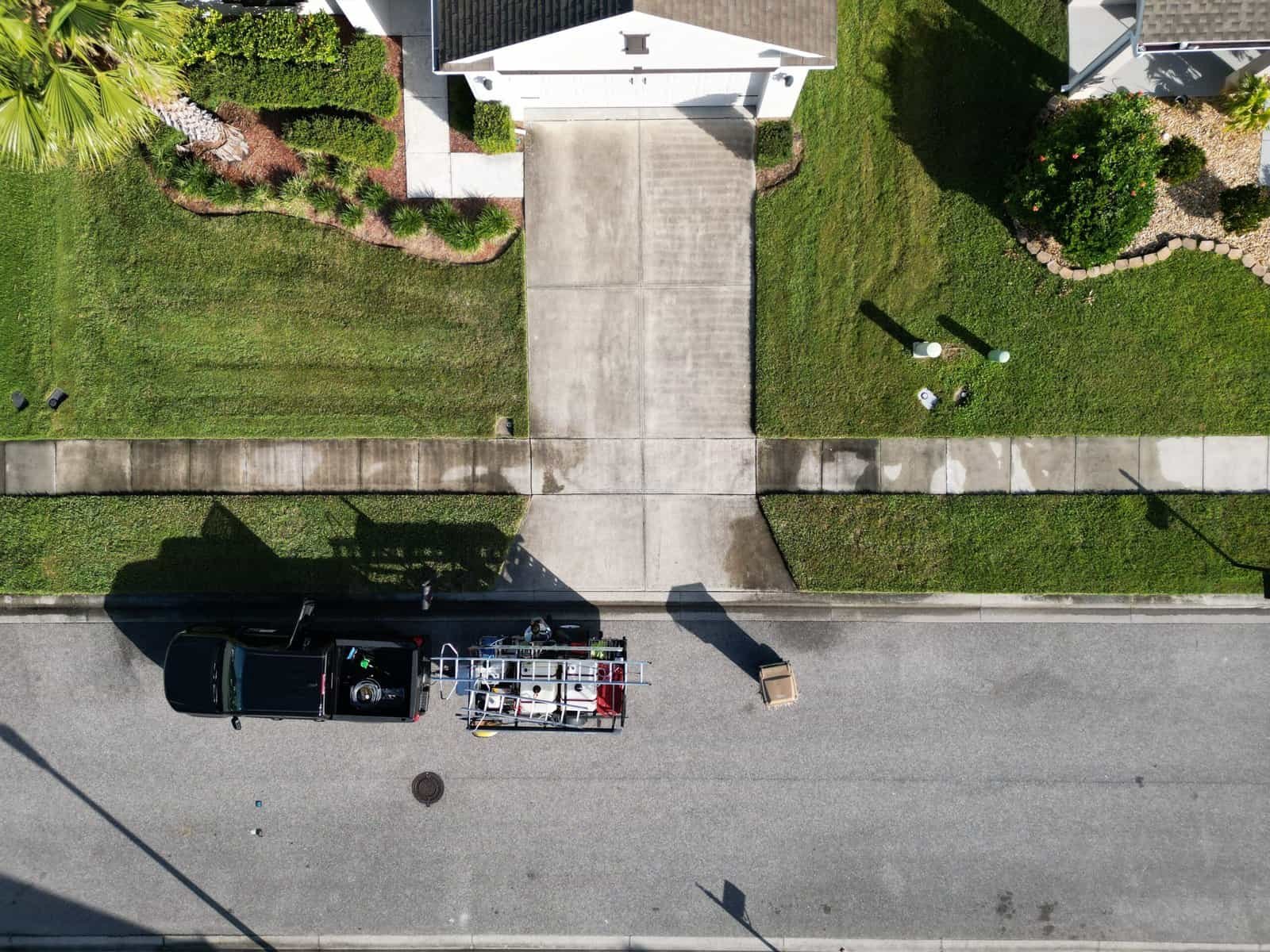
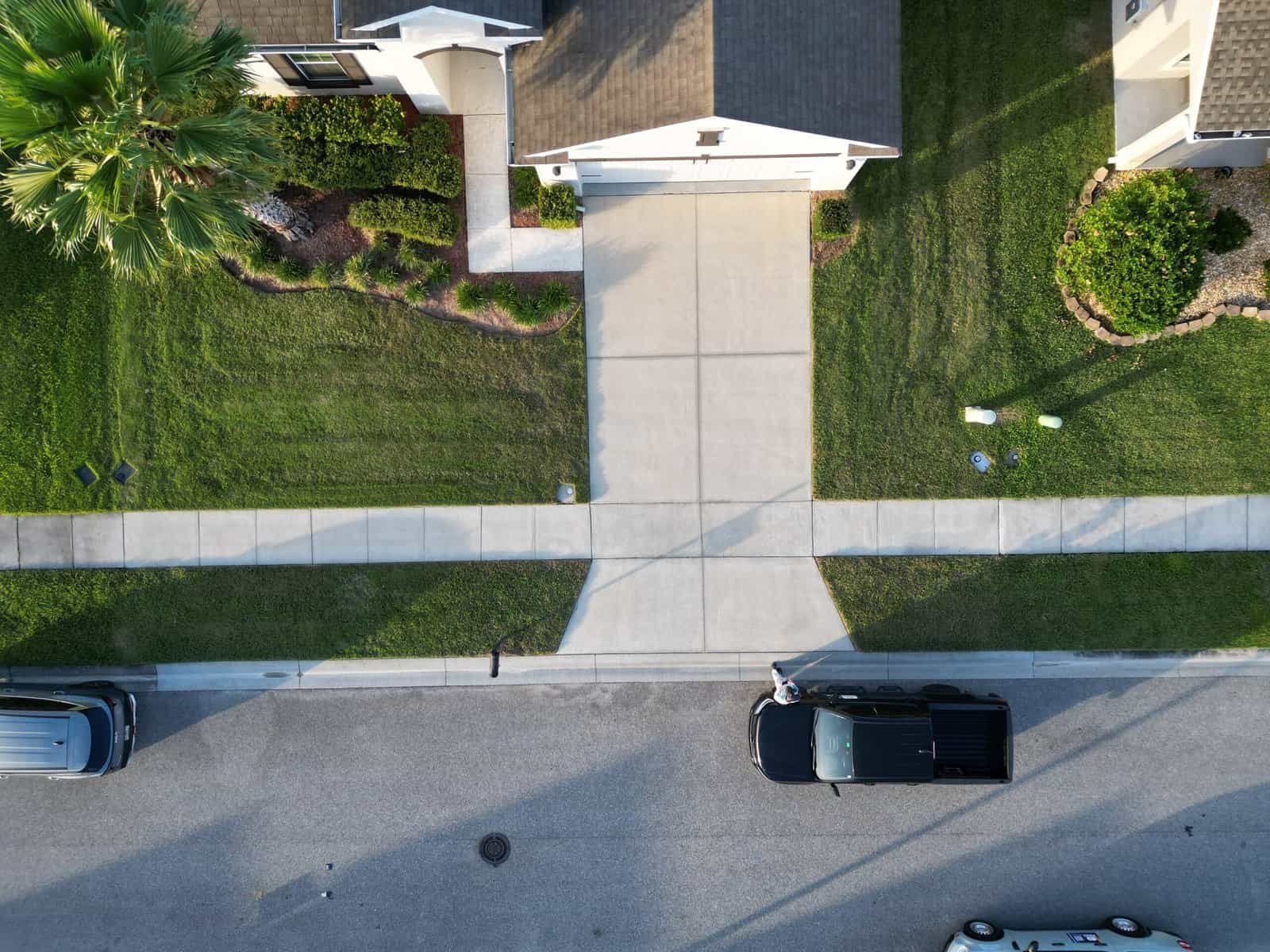
The overhead drone photos show the entire driveway rather than an isolated clean patch — you can see the difference from the garage all the way to the sidewalk and street.
We Didn't Pretend the Existing Etching Was Dirt
There's an important distinction we make with customers: cleaning can remove contamination — it cannot reverse physical damage to concrete. The light etching from the previous cleaning was already part of the concrete when we arrived.
Rather than promising something pressure washing physically couldn't accomplish, we adjusted our process to avoid making the damage worse and worked toward a more uniform finished appearance. That's one of the reasons inspecting concrete before choosing pressure, chemicals and equipment matters — two driveways can look equally dirty and still require different approaches.
"Gunnar was very clear in pricing, communication was great, answered all questions… Showed up on time, actually even a few minutes early which is a rarity and did an amazing job with pressure washing driveway and surrounding area… Highly recommend!!"
For us, the result wasn't just getting the concrete brighter. It was resolving the homeowner's immediate HOA concern while cleaning a previously damaged surface without adding another layer of pressure-washing marks.
What This St. Cloud Driveway Cleaning Demonstrates
This project shows why our driveway cleaning process combines inspection, chemical treatment and controlled mechanical cleaning rather than relying on maximum pressure. We encountered three different issues — and knowing which problem you're looking at determines how you should clean it:
Sometimes the solution isn't more pressure. Sometimes the professional decision is knowing when to use less.
Need Your Driveway Cleaned in St. Cloud?
If your concrete is developing black algae, lichen, mold, mildew or general discoloration, Baha Softwash can evaluate the surface before deciding how aggressively it should be cleaned — which matters especially if the driveway was pressure washed improperly or you're facing an HOA notice.